Astronomers have found evidence that the universe may contain three times as much stars than previously thought, as scientists have widely underestimated the number of red dwarfs. The discovery greatly increases the likelihood of life existing elsewhere in the cosmos, and it also helps to account for some of the universe's "missing mass", meaning that less dark matter is needed to explain how the universe looks and behaves.
Astronomers say the Universe may contain three times the number of stars as is currently thought. Their assessment is based on new observations showing other galaxies may have very different structures to our Milky Way galaxy.
It found that galaxies older than ours contain 20 times more red dwarf stars than more recent ones.
Red dwarfs are smaller and dimmer than our own Sun; it is only recently that telescopes have been powerful enough to detect them.
"There are possibly trillions of Earths orbiting these stars," he said. "Red dwarfs are typically more than 10 billion years old and so have been around long enough for complex life to evolve on planets around them. It's one reason why people are interested in this type of star."
More details
at BBC News.
 Posted on
by Thomas De Maesschalck
Posted on
by Thomas De Maesschalck 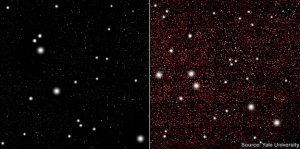

Comments (0)
No comments yet.