How to check LCD displays for dead pixels
 Posted on
by Thomas De Maesschalck
Posted on
by Thomas De Maesschalck 
Take a good look at your notebook computer screen. Do you find some tiny dark spots? You could have dead pixels. One of the most expensive parts of your notebook computer is the LCD screen.
LCD's are highly sensitive and any amount of pressure, touching or handling may damage it. As such, dead pixels aren't an uncommon thing. Apparently, some degree of dead pixels is to be expected. Still if you have a lot of them, it would be classified as a defective screen. So, how do you determine if you have dead pixels?
Before we go there, make sure it's not just dust. Clean your screen first. The best way to do that is to use a soft cotton cloth - no rags or paper towel as they can scratch your screen easily. Moisten the cloth with plain old water and wipe the screen gently.
Side note: I've also tried maintaining my screen dust free with a Swiffer Duster. These are inexpensive, very soft and they pick up the dirt not just re-distribute it. It has worked well. Of course, this will not take care of smudges or dried on dirt. So you'll still have to use the cotton cloth and water combo sometimes.
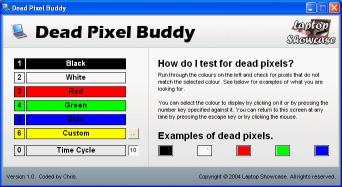
You can also do a low tech way by changing your desktop's background color to black, white, red, green blue and yellow, checking the screen each time you change the colors. This is of course not fool proof especially if you have tons of icons on your desktop but it's a good 'backup' check if you don't have Internet access to download the file or whatever the case may be.
If you do find dead pixels, don't panic yet, as mentioned earlier, a small amount of dead pixels could be inevitable but if you have a lot of them and your notebook computer is still under warranty, this may be a good time to call up the manufacturer and ask for assistance.
Related Resources:
Dead Pixel Buddy
5 Days To A Healthier Notebook Computer
About the Author
Lynn Chan helps new owners learn proper notebook care and use. Take care of your investment, find out how at http://www.notebook-computer-infocenter.com

You can achieve the same effect in Windows XP by creating the 7 solid-color images and then viewing them as a slideshow.
ReplyIf you haven't noticed a dead pixel yet, dont look for it! once you know where it is, you'll keep looking at it!... Ignorance is Bliss!
ReplyYou are damn right!! I wish i had read that before discovering my dead pixel
ReplyDON'T USE WATER TO CLEAN THE LCD!!! I don't know why the author chose water, but it leaves streaks. More research should be done before an article like this is written! Use a lint free and soft cloth. Go to your staples, office depot, etc and buy the LCD cleaner or just google and find another solution.
ReplyJust use Metho - it evaporates off 100%.
Replythis program : http://sam100.free.fr/UDPixel/ is really better than buddy, in addition, it allows to fix dead pixel by stimulating !
Reply