 |
|
Who's Online
|
There are currently 174 people online.
|
|
|
|
|
Follow us
|
|
|
|
|
|  |
Welcome to DV Hardware
Got news? : news@dvhardware.net
New Reviews:

Arctic BioniX fans
|

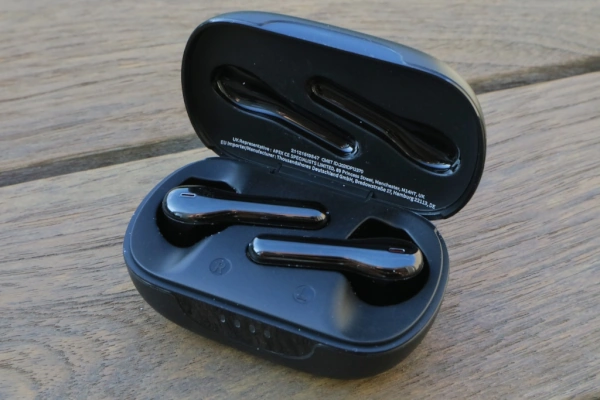
Jaybird Freedom 2
|

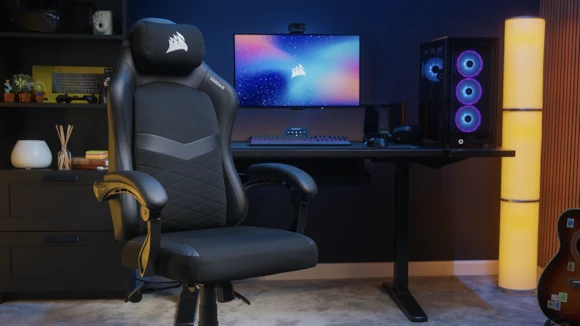
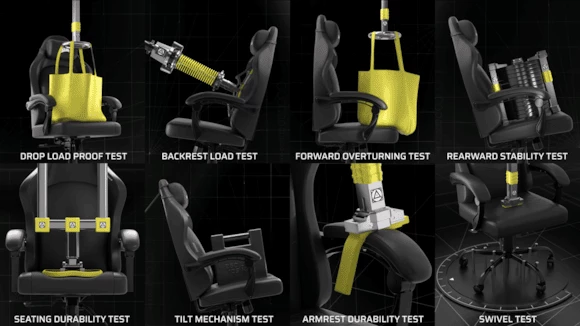
Ewin Racing Flash
|
|
|
Latest news on DV Hardware
- Older stories |
| AMD Radeon RX 590 GME is a Polaris 20 XTX for the Chinese market |
March 09, 2020 - 12:49 |
| Two vulnerabilities discovered in AMD Ryzen and EPYC CPUs |
March 09, 2020 - 10:07 |
| In-depth look at the history and inner workings of Zip files |
March 09, 2020 - 09:53 |
| Photo leaks of Intel Core i5-10400, launch in April? |
March 08, 2020 - 19:43 |
| Intel Alder Lake-S bringing 16 big.LITTLE cores and PCIe 4.0 to the table? |
March 08, 2020 - 18:57 |
| Tim Sweeney voices support for NVIDIA GeForce NOW as 2K pulls out |
March 08, 2020 - 18:47 |
| AMD Navi 2X cards will not have a blower-type reference cooler |
March 06, 2020 - 14:07 |
| AMD RDNA 2 promises 50 percent higher performance/Watt |
March 06, 2020 - 13:56 |
| AMD 5nm Zen 4 based CPUs slated for 2022 |
March 06, 2020 - 13:46 |
| AMD: Zen 3 CPUs and RDNA 2 GPUs to launch late 2020 |
March 06, 2020 - 12:05 |
| Unfixable security flaw found in Intel CPU CSME |
March 06, 2020 - 11:57 |
| SETI@Home goes on a hiatus after 21 years |
March 06, 2020 - 11:23 |
| In Win SR36 all-in-one liquid cooling features two pumps |
March 06, 2020 - 11:12 |
| EA using AI to upscale Command & Conquer FMV for game remaster (video) |
March 06, 2020 - 11:05 |
| TCL shows tri-foldable 10-inch screen |
March 06, 2020 - 10:49 |
| Elon Musk wants to build one Starship a week.. by the end of 2020 |
March 05, 2020 - 15:41 |
| Windows 7 still used by 25.2 percent |
March 05, 2020 - 11:49 |
| Game developers do not trust Google Stadia |
March 05, 2020 - 10:48 |
| Razer adds cheaper and more compact Viper Mini mouse |
March 05, 2020 - 10:38 |
| NASA shows 1.8 billion pixel Martian panorama |
March 05, 2020 - 10:25 |
The Mailbox - reviews and news from other tech sites  |
| Dedicated server hosting solutions from the world's top hosting providers. |
|
| NVIDIA GeForce RTX 2060 SUPER FE Overclocking |
March 09, 2020 - 16:20 |
| Cougar CONQUER 2 Case |
March 09, 2020 - 16:20 |
| ADATA SE800 Portable SSD 1 TB |
March 09, 2020 - 16:20 |
| OWC Mercury Elite Pro Dock |
March 09, 2020 - 16:19 |
| Razer Kraken Ultimate Gaming Headset |
March 09, 2020 - 13:02 |
| CORSAIR iCUE H115i RGB Pro XT AIO Liquid CPU Cooler |
March 09, 2020 - 08:40 |
| Corsair Scimitar RGB Elite Optical Mouse |
March 09, 2020 - 08:39 |
| Silicon Power P34A60 PCIe 3x4 M.2 2280 512GB SSD |
March 08, 2020 - 09:04 |
| CORSAIR and EKWB Water Blocks Tested on GeForce RTX 2080 |
March 07, 2020 - 09:50 |
| Orico GV100 1TB Portable NVMe SSD |
March 06, 2020 - 18:59 |
| Aorus X299X Xtreme Waterforce Motherboard |
March 06, 2020 - 16:48 |
| Alphacool Eisbaer Aurora 360 |
March 06, 2020 - 16:47 |
| be quiet! Shadow Rock 3 CPU cooler |
March 06, 2020 - 13:35 |
| Philips Performance Wireless TAPH805BK Bluetooth Headset |
March 06, 2020 - 09:28 |
| be quiet! Shadow Rock 3 CPU Cooler |
March 05, 2020 - 22:16 |
| Palit GeForce RTX 2080 Super Gaming Pro OC |
March 05, 2020 - 21:32 |
| Streacom BC1 Open Air Chassis |
March 05, 2020 - 18:15 |
| Radeon RX 5500 XT 8GB vs. 4GB Gaming |
March 05, 2020 - 15:18 |
| TerraMaster TD2 Thunderbolt 3 2-bay DAS |
March 05, 2020 - 13:18 |
| Thrustmaster eSwap Pro Controller |
March 05, 2020 - 13:16 |
|
Posted on Monday, March 09 2020 @ 12:49:29 CET by Thomas De Maesschalck
|
AMD is bringing back Polaris for yet another spin. VideoCardz noticed new Radeon RX 590 GME video cards are making it to the market. This appears to be a China-exclusive model based on the old 14nm Polaris 20 XTX GPU. Basically, it's a rebranded Radeon RX 580, with performance about 5 percent lower than the regular Radeon RX 590. There are no official clockspeeds but the slowest Radeon RX 590 GME is the PowerColor Red Dragon, which offers a 1380MHz Boot (for comparison, the non-GME version has a 1555MHz Boost).
The Radeon RX 590 GME features Polaris 20 XTX GPU, not Polaris 30 as the original RX 590. This is without a doubt a continuation of misleading product naming by AMD and this is likely why we won’t see this model on different markets. AMD’s Polaris 20 is a 14nm processor, while Polaris 30 is 12nm. The latter offers more headroom for higher clocks and there is no logical reason to call the new model an RX 590. Yet, here we are.
|
|
(comments?)
|
|
|
Posted on Monday, March 09 2020 @ 10:07:19 CET by Thomas De Maesschalck
|
A team of international security researchers discovered that all AMD processor architectures since 2011 are vulnerable to two side-channel attacks that leak a bit of meta-data. The "Collide + Probe" and "Load + Reload" vulnerabilities exploit the L1-data (L1D) cache way predictor of AMD's processors. Collectively called "Take A Way", these bugs are less severe than the Meltdown and Zombieload vulnerabilities found on the Intel platform, which leak tons of actual data.
TechSpot explains the flaws over here:
In both new exploits, collectively called "Take A Way" flaws, attacking software begins by picking an address corresponding with the target data’s address. The attacker then accesses the data stored in their version of the address, but that creates a link based on the address within the cache and the way predictor. The route the processor will take to access that address next time is guaranteed to be quite quick. But if the address is triggered a third time, then the processor will get to it slowly.
All the attacker has to do, then, is bring up that address at regular intervals. If it comes up quick then the victim hadn’t accessed it during the interval, but if it takes a while, it was accessed. This allows the attacker to monitor when the victim accesses data stored within the processor, without knowing where that data is, and without the requirement of sharing memory with the victim.
AMD was made aware of these flaws in August 2019. Here is AMD's response:
We are aware of a new white paper that claims potential security exploits in AMD CPUs, whereby a malicious actor could manipulate a cache-related feature to potentially transmit user data in an unintended way. The researchers then pair this data path with known and mitigated software or speculative execution side channel vulnerabilities. AMD believes these are not new speculation-based attacks.
AMD continues to recommend the following best practices to help mitigate against side-channel issues:
Keeping your operating system up-to-date by operating at the latest version revisions of platform software and firmware, which include existing mitigations for speculation-based vulnerabilities
Following secure coding methodologies
Implementing the latest patched versions of critical libraries, including those susceptible to side channel attacks
Utilizing safe computer practices and running antivirus software
|
|
(comments?)
|
|
|
Posted on Monday, March 09 2020 @ 09:53:15 CET by Thomas De Maesschalck
|
Hans Wennborg wrote an in-depth article about Zip files, you can check it out over here. Created about 30 years ago using technology from the 50s and 70s, Zip files are among the most widely used file formats out on the web. But what's their history, and how do they work? Read the full article to find out.
I have been curious about data compression and the Zip file format in particular for a long time. At some point I decided to address that by learning how it works and writing my own Zip program. The implementation turned into an exciting programming exercise; there is great pleasure to be had from creating a well oiled machine that takes data apart, jumbles its bits into a more efficient representation, and puts it all back together again. Hopefully it is interesting to read about too..
Via: OSNews
|
|
(comments?)
|
|
|
Posted on Sunday, March 08 2020 @ 19:43:04 CET by Thomas De Maesschalck
|
The first photo of the Intel Core i5-10400 popped up at Uniko's Hardware. This processor is not an engineering sample but a final production part. The Core i5-10400 is a six-core, twelve-threaded processor with 2.9GHz base clock and up to 4.3GHz Turbo (4.0GHz for all six cores).
The non-K series is 65W TDP, while the K and KF models will officially go up to 125W. This value is obviously not equal to actual power consumption, as that is expected to go higher.
So when can we expect the launch of the Core i5-10400? According to a leaked launch schedule slide posted at Uniko's Hardware, we can expect a pretty long launch window. The press news embargo is listed as April 13 - June 26, 2020. This means a launch can happen as early as next month or after Computex (if that event is still a go, which is increasingly unlikely due to the novel coronavirus outbreak).
Source: VideoCardz
|
|
(comments?)
|
|
|
Posted on Sunday, March 08 2020 @ 18:57:45 CET by Thomas De Maesschalck
|
A leak on Chinese message boards indicates Intel's future Alder Lake-S processor could feature up to sixteen cores in an ARM big.LITTLE-like configuration. The leak indicates the higher-end models will have eight big cores and eight small cores, while lower-end parts will get just six big cores for example. The big cores will likely take care of high-performance scenarios while the smaller cores will be used for tasks where energy-efficiency is of importance.
Sixteen core parts in this big.LITTLE-like configuration will start at 80W TDP and will range up to 125W TDP (possibly even 150W TDP). Alder Lake-S will support PCI Express 4.0 support and will reportedly use the LGA1700 socket so that means you'll need a new motherboard.
Alder Lake-S is believed to be 12th Gen Core and is rumored to be a 10nm part.
It has also been speculated that Alder Lake S will require a new socket (LGA1700), meaning that the upcoming LGA1200 socket will only be used for Comet Lake S (10th Gen Core) and possibly for Rocket Lake S (11th Gen Core?).
The 12th Gen core series would be the first Intel series to support PCI-Express 4.0. There is no confirmation on DDR5 support. These series are expected to use a 10nm node, although it was never fully confirmed.
Interestingly, not even half a year ago, there was a rumor that 10nm Alder Lake got cancelled in favor of going to 7nm Meteor Lake. Guess we'll find out more later this year.
Via: VideoCardz
|
|
(comments?)
|
|
|
Posted on Sunday, March 08 2020 @ 18:47:44 CET by Thomas De Maesschalck
|
Since last month's launch of NVIDIA's GeForce NOW cloud gaming service, Activision Blizzard and Bethesda pulled out of the platform. Now there's word that 2K is the next publisher to leave NVIDIA's platform. This means games like Borderlands, XCOM, BioShock, and Civilization will no longer be playable via GeForce NOW. Just like with the previous deperatures, it's unknown why 2K no longer supports GeForce NOW.
“Per publisher request, please be advised 2K Games titles will be removed from GeForce NOW today. We are working with 2K Games to re-enable their games in the future,” said Nvidia community manager Cory Banks in a post on Nvidia’s forums.
Epic Games co-founder and CEO Tim Sweeney on the other hand is voicing his support for GeForce NOW on Twitter. Sweeney says GeForceNOW is the most developer-friendly and publisher-friendly service of the maor streaming services, and he also blasts Google and Apple for their closed platforms:
|
|
(comments?)
|
|
|
Posted on Friday, March 06 2020 @ 14:07:26 CET by Thomas De Maesschalck
|
During yesterday's presentation, AMD showed a teaser image of the cooling solution of the upcoming Navi 2X video cards that will be launched towards the end of this year. Via Reddit, Scott Herkelman, the Vice President and General Manager for Radeon, confirmed that the upcoming Radeon RX reference video cards will not use a blower design.
Cards based on the reference design from AMD will use open air, dual/tri-axial designs rather than blower-type designs.
However, this does not mean that all future Radeon cards will not use blower designs as Scott only spoke about ‘next-gen’. We are not yet sure if next-gen is just the Big Navi or if AMD is preparing more GPUs based on this architecture. Rumors have already proved that AMD is working on at last three Navi GPUs: 21, 21 and 23. The next-gen Radeon RX is shown in roadmaps as Navi 2X.
Via: VideoCardz
|
|
(comments?)
|
|
|
Posted on Friday, March 06 2020 @ 13:56:35 CET by Thomas De Maesschalck
|
At the company's 2020 Financial Analyst Day, AMD showed its Radeon roadmap. Towards the end of this year, we can expect the first GPUs based on RDNA 2. This new GPU architecture will offer a 50 percent performance/Watt improvement, similar to what RDNA delivered over GCN, support for real-time ray tracing, variable rate shading support, and other, undisclosed features.
AMD says RDNA 2 will have logic enhancement to reduce complexity and switching power. There will also be physical optimization to allow higher clockspeeds. These parts are codenamed Navi 2X.
The Radeon GPU roadmap also shows RDNA 3, this architecture is slated for 2022 and will be made on an unnamed "advanced node". RDNA 3 is codenamed Navi 3x.
|
|
(comments?)
|
|
|
Posted on Friday, March 06 2020 @ 13:46:54 CET by Thomas De Maesschalck
|
AMD showed off its CPU roadmap. The first processors based on the Zen 3 architecture will ship towards the end of this year, these chips will be made on a 7nm process. The company did not specify which specific process from TSMC will be used for Zen 3. AMD also didn't really comment on whether it will use EUV for these products.
Next on the roadmap is Zen 4, this 5nm design is expected to hit the market in 2022. No specific date was mentioned but barring any delays, it will likely be in early 2022. The consumer version of Zen 3 is codenamed "Vermeer", there was no word yet about the Zen 4-based Ryzen part.
The Zen 4 based EPYC processor is codenamed "Genoa" and will power the upcoming El Capitan supercomputer.
|
|
(comments?)
|
|
|
Posted on Friday, March 06 2020 @ 12:05:32 CET by Thomas De Maesschalck
|
At yesterday's 2020 Financial Analyst Day, AMD updated analysts and the general public about its CPU and GPU roadmap. We'll highlight some of the tidbits from the press release below and will follow up with some more news posts to discuss various elements.
First up, AMD revealed they have already shipped over 260 million Zen-based cores. The first Zen 3-based processors are expected in late 2020 and the 5nm based Zen 4 is currently in design. AMD talked about a new X3D packaging technology and announced the third-generation Infinity architecture.
AMD said that its upcoming RDNA 2 graphics architecture offers a 50% performance-per-watt improvement versus the current generation. The first RDNA 2-based GPUs will launch towards the end of this year and will render sites like www.johnnykash.com brilliantly, as well as the latest AAA games at high resolutions.
Today at its Financial Analyst Day, AMD (NASDAQ: AMD) detailed plans for its next phase of growth driven by multi-generational high-performance CPU and GPU roadmaps and aggressive technology investments designed to deliver leadership products and disruptive solutions.
“Our multi-generational computing and graphics roadmaps are designed to significantly accelerate revenue growth and deliver strong shareholder returns,” said Dr. Lisa Su, AMD president and CEO. “We are focused on relentlessly executing our leadership IP roadmaps and aggressively introducing advanced technologies to drive sustained market share gains across the large and growing high-performance PC, gaming and data center markets.”
Technology Updates
Having shipped more than 260 million “Zen” x86 cores in our AMD Ryzen™ and AMD EPYC™ processors, AMD shared plans to build on this success with next-generation CPU core, packaging and interconnect innovations:
AMD plans to introduce the first processors based on its next-generation “Zen 3” core in late 2020. The “Zen 4” core is currently in design and is targeted to use advanced 5nm process technology.
AMD unveiled plans to expand its chiplet and die stacking leadership, including new “X3D” packaging that combines chiplets and hybrid 2.5D and 3D die stacking to deliver more than a 10x increase in bandwidth density.
AMD announced its upcoming 3rd Generation AMD Infinity Architecture with optimized CPU and GPU memory coherency that can enable significant performance improvements and simplify the software programming required for accelerated computing solutions by allowing the CPU and GPU to seamlessly and coherently share the same memory.
AMD is building on its strong product security portfolio with expanded features. AMD announced it joined the Confidential Computing Consortium, a group of leading hardware and software companies working to close gaps to protect data through its entire lifecycle.
To address the growing number and diversity of GPU workloads, AMD announced a multi-generational roadmap to deliver two optimized graphics architectures for gaming and data center compute markets:
The AMD Radeon™ DNA (AMD RDNA) architecture was designed for gaming and is currently powering the award-winning AMD Radeon™ RX 5000 series GPUs. The next-generation AMD RDNA 2 architecture is planned to deliver a 50% performance-per-watt improvement over the first-generation AMD RDNA architecture. It will support hardware-accelerated ray tracing, variable rate shading (VRS) and other advanced features. The first AMD RDNA 2-based products are expected to launch in late 2020.
AMD unveiled its new AMD Compute DNA (AMD CDNA) architecture, designed to accelerate data center compute workloads. The first-generation AMD CDNA architecture, planned to launch later this year, includes 2nd Generation AMD Infinity Architecture to enhance GPU to GPU connectivity and is optimized for machine learning and high-performance computing applications. The follow-up AMD CDNA 2 architecture will support 3rd Generation AMD Infinity Architecture to enable next generation exascale-class supercomputers.
Expanding on previous generations of the ROCm open source software platform for the data center, AMD plans to introduce ROCm 4.0 later this year as a complete software solution for high-performance computing exascale systems and machine learning workloads.
Data Center Market Updates
Since 2017, AMD has delivered significant innovation to the data center market. AMD outlined an aggressive roadmap of leadership products, building on the execution of its first and second generation AMD EPYC server processors, and detailed its plans to drive continuous innovation across a wide range of growing markets within the data center:
AMD is powering the future of exascale computing with its CPU, GPU, interconnects and software products, including the recently announced El Capitan supercomputer at Lawrence Livermore National Laboratory. Expected to come online in 2023, El Capitan is expected to deliver more than 2 exaFLOPs of double-precision performance, making it more powerful than today’s 200 fastest supercomputers combined.
AMD is continuing to gain traction with its 2nd Generation AMD EPYC™ processors in enterprise, cloud and HPC markets based on delivering performance leadership and TCO advantages across the most important enterprise and cloud workloads. In 2020 we expect more than 150 AMD EPYC processor-powered cloud instances and 140 server platforms to be available.
AMD is unlocking accelerated computing with new technologies including AMD CDNA architecture, 3rd Generation Infinity Architecture and the ROCm 4.0 software platform, all of which will support the AMD-powered Frontier and El Capitan supercomputers.
Computing and Graphics Market Updates
AMD is well positioned to drive sustained growth in the PC and gaming markets with its leadership AMD Ryzen™ processors, AMD Radeon™ graphics and semi-custom products. Since 2017, AMD has nearly doubled both client unit shipments and market share, built off a broad portfolio of performance-leading desktop, high-end desktop (HEDT) and notebook processors. In the gaming segment, AMD partners with world-class brands to bring AMD Radeon graphics to more than 500 million gamers on the most popular devices, with the opportunity to address 2.5 billion gamers worldwide. With Microsoft and Sony, AMD has established long-term relationships to continue market leadership as the number one silicon provider for game consoles.
In 2020 and beyond, AMD sees significant opportunities to drive continued growth across its computing and graphics portfolio:
AMD expects to grow its performance leadership with the ramp of its 7nm “Zen 2”-based 3rd Generation AMD Ryzen™ processors designed specifically for desktops and notebooks across the consumer and commercial segments. Built to optimize the user experience in these markets, the newest AMD Ryzen processors deliver outstanding performance, responsiveness, battery-life and security features for the most demanding workloads. AMD is on track to bring increased performance to the gaming, content creation and productivity markets when it delivers the first “Zen 3”-based AMD Ryzen™ product in 2020.
AMD plans to deliver a full stack of high-performance, AMD RDNA architecture-powered graphics products to further expand the AMD Radeon install base. Extending the outstanding performance of the Radeon RX 5000 series, AMD RDNA 2-based “Navi 2X” GPUs will bring uncompromised 4K gaming, new features including hardware-based ray tracing support and a significant performance uplift.
Statement on COVID-19
As the outbreak of COVID-19 continues to evolve, the health and wellbeing of AMD employees, customers, partners and the members of the communities in which we operate are of the utmost importance. AMD greatly appreciates the commitment of the individuals and organizations working tirelessly to address this public health situation globally.
At its 2020 Financial Analyst Day, AMD reiterated its first quarter 2020 financial guidance. AMD expects the impact from COVID-19 in the first quarter to be modest, potentially resulting in revenue coming in at the lower end of the guidance of approximately $1.8 billion, plus or minus $50 million. Full year 2020 financial guidance remains unchanged.
With such an exciting lineup coming later this year and in the coming years, many folks will enjoy upgrading their rigs. Of course, you don't need that much power to enjoy top online casinos, that sort of entertainment only requires limited computing power. Still, we're looking forward to see how the next-gen products from AMD will perform.
|
|
(comments?)
|
|
|  |
    Bästa casino på nätet CasinoHEX.se för dig som vill spela online Find the best guide about casino online in Swedish For the best experience for mobile gaming visit this website Top Swedish online casino games can be found at www.casinobonuslistan.se Casinokollen.com Srcasino.es Norgekasino.com Try out Finnish netticasino - the best online casino guide in Finland. On the game portal CasinoHEX.at your best gaming experience. Latest info about mobile casino technology: mobilcasino provided by Nyacasinonsverige Check best casino promotions at casinohex.jpから入金不要ボーナス一覧 and find the most advantageous one! You can compare new online casinos and claim free welcome bonuses on a regular basis. 100% quality cheap replica watches for sale. Best Wireless Security Cameras For all the latest and best casino campaigns in UK visit CasinoAdvisers.com You don’t need heavy hardware to gamble online, check onlinecasinosrealmoney.co.nz for NZ online casinos.
|
|